
From the Toysit archive
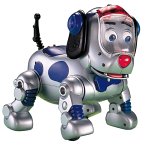
Rocket the Wonder Dog
Understand Rocket the Wonder Dog as a headset, trainer and robot system, with its two play modes explained and the original Toysit description preserved.
The play at a glance
The dog is only one part of Rocket’s system
Rocket the Wonder Dog turns giving a pet a command into a small performance: speak, watch for a cue, then see the mechanical dog move. The headset and Personal Puppy Trainer are central to how that performance works.
Fisher-Price’s guide offers two routes into the play. One starts with a button choice; the other uses voice commands recorded into the trainer. Understanding that difference makes the original toy much less mysterious.
Follow the command through the system
The manual directs the headset’s transmitter toward the dog. A loose dog without its matching headset and trainer is therefore only part of this command-play system.
Two ways to choose an action
- Trainer in Training
- The player chooses a command button and then speaks into the headset. The guide explicitly says any word can supply this voice cue; the button has selected the action.
- Expert Trainer
- A name and commands are recorded into the Personal Puppy Trainer first. During play it recognizes those trained cues; the guide provides separate settings for two trainers.
The second mode asks more of the voice-recognition system, but both work within defined actions. Neither mode establishes an ability to follow arbitrary requests.
Notice the ready signals
Headset beeps and the dog’s glowing head light tell the player when to speak or wait. Commands given while an action is still underway may be ignored. Consult the complete manual for the timing and setup sequence.
That makes waiting part of the play. A clear sign that a message has arrived can be as useful as an impressive movement.
Make a command relay
- Draw a dog and make two action cards: sit and turn.
- Give one player the cards, another a paper trainer, and a third the dog drawing.
- First let the card choose the action. Any agreed greeting releases the message to the dog player.
- Next hide the cards and agree on two spoken or signed cues that the trainer player must distinguish.
- Add a ready card. Pass on a command only while it is showing, then compare the two versions.
This invented relay explores selection, recognition and feedback. It does not program Rocket or require an electronic toy.
The historical record
Original Toysit coverage
The original Rocket description and later general paragraph about voice-activated pets remain below. The broad claims about conversation and emotional development are historical commentary, not verified features or measured outcomes for Rocket. The manufacturer’s two named modes are explained above without extending them to open-ended conversation.
Rocket the Wonder dog is remote controlled.
Rocket is a remote controlled pet that responds to preschoolers commands. Pet commands activation is grow with me: Mode 1 provides the younger preschooler the ability to activate Rocket via button activated remote control: Mode 2 provides the older aged preschooler the ability to program Rocket to respond to voice activated remote control.
Voice-activated robotic pets offer young children a unique blend of technology and companionship, merging imaginative play with the thrill of interacting with a responsive "creature." These toys respond to verbal cues, performing tricks, showing emotions, or even conversing in simple phrases. This level of interaction captivates kids, teaching them cause-and-effect relationships while also providing a platform for emotional development. Children can feel like they are communicating with a real pet, nurturing their empathy and caregiving skills. Moreover, the voice-activated feature adds a layer of magic and wonder, as the robotic pet seems to "understand" and react to the child, deepening their engagement and sparking their creativity.
Sources and editorial notes
The Fisher-Price command manual for models 77806, 77807 and 77808 was reviewed for its system diagram, two modes, programming, ready signals and troubleshooting. Its dog illustrations match the original photograph. Voice recognition is described as a function of the Personal Puppy Trainer; the dog is not needed while commands are recorded. The overview is not a replacement for the complete setup guide. No hardware, recognition accuracy or current replacement-part supply was tested. The paper relay is an independent activity.
- Fisher-Price Rocket command manual — Manufacturer guide for models 77806, 77807 and 77808; system diagram and Trainer in Training / Expert Trainer modes.
Images and descriptions are retained as historical material. How Toysit covers toys.
Created for Toysit by Tabbloza — the artwork in our header.