
From the Toysit archive
Throw Me a Bone
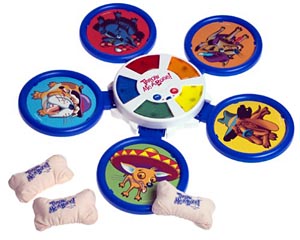
Five dog targets surround a colorful lighted center. Soft beanbag bones turn a changing light cue into a playful delivery challenge.
The play at a glance
Watch for the light, then feed the waiting dog
Five cartoon dogs sit in a ring around Throw Me a Bone’s white electronic center. Their targets have bright blue rims and differently colored backgrounds. Three soft, pale beanbag bones wait nearby, ready for a gentle toss.
A light in the center points the player toward a dog. That makes each throw a little sequence: spot the color, find the matching target, then send a bone toward it. The dogs supply spoken feedback as the game keeps score.
Three ways to follow the lights
In Light Toss, aim for the dog matching the illuminated lens. A bone that stays on the correct target scores two points; a hit that bounces away scores one. Only the first target struck counts. Blinking Lights uses the same scoring while the light travels around the circle. Lights Out asks players to clear the flashing lights by hitting the corresponding targets while they flash.
Picture the difference between waiting for a steady cue and following a cue around the dogs: the target arrangement stays familiar while the moment for the throw changes.
Make room for a turn
The guide supports one to four players, with solo practice versions. It suggests a four-foot throwing line adjusted for the players. Use a clear floor area and wait for the announced score before throwing. In multiplayer play, toss the three bones individually, then press Next Player. Repeat repeats the last announcement. The guide explains target presses for selecting the game and player count.
Try it: dog delivery route
Make five large paper dog portraits for this original Toysit activity. Give each dog a name and place the portraits on a clear floor, away from anything breakable. Use a loosely rolled sock as the pretend delivery.
- A partner names a dog and invents its order: perhaps a picnic blanket or a storybook.
- Gently toss the sock toward that portrait from a comfortable distance.
- Tell one sentence about what the dog does with the delivery, then swap roles.
Try a round in which each dog orders something for the next dog. The linked deliveries make a small neighborhood story. This paper version has its own pretend-play rules, separate from the electronic game.
The historical record
Original Toysit coverage
The original product account and commentary are preserved below as historical coverage.
Lighted action toy.
Action toy from Hasbro - a fun game for the family, even when kids are younger.
Games that involve tossing a small sandbag onto a target are a delightful source of entertainment, often enjoyed at picnics, carnivals, and backyard gatherings. The appeal lies in their simplicity and the skill required to land the sandbag accurately. Players take turns testing their aim and coordination as they attempt to toss the sandbag onto a platform, through a hole, or at a stack of objects.
These games are inclusive and suitable for all ages, making them great for family and social gatherings. Whether it's the satisfying thud of a successful throw or the suspense of teetering sandbags on a stack, these games provide a sense of accomplishment and excitement. They encourage friendly competition, laughter, and camaraderie as players cheer each other on. Additionally, the portability of these games means they can be enjoyed virtually anywhere, adding an element of outdoor fun to various occasions. The simplicity and universal appeal of sandbag tossing games make them a timeless and cherished source of amusement for people of all ages.
Sources and editorial notes
Hasbro’s complete four-page PDF, product 40393, matches the five targets and three beanbag bones in the retained photograph. Its printed setup, three modes and controls support this profile; the ASIN remains an original Toysit identifier, not a manual identifier. The historical sandbag essay describes the wider game type rather than this electronic unit’s features. The paper-dog activity is original editorial play; no physical testing was performed.
- Original Toysit image — Existing same-site photograph reviewed and retained unchanged.
- Hasbro Throw Me a Bone instructions (PDF) — All four PDF pages reviewed, including the printed setup, modes, controls and storage guidance.
- Original Toysit coverage — Complete original product account and historical commentary preserved.

Images and descriptions are retained as historical material. How Toysit covers toys.
Created for Toysit by Tabbloza — the artwork in our header.