
Play ideas to start with
Follow a shape, a sound or a small journey. These reading routes connect expanding links, letter stories, bounce rhythms and imaginary destinations, with different toys and settings for each activity.
Explore earlier toys through their play ideas and historical context. Each article explains its evidence and edition limits; these selections are reading routes, not a current buying list.
Watch shapes and listen for patterns
Historical profile and play idea
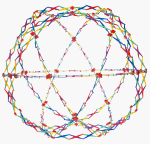
Compare two changing outlines
Follow one colored link as the sphere opens, then sketch two silhouettes and point out a repeated shape.
Hoberman Expanding Sphere
Historical profile and play idea

Let a letter send a postcard
A caregiver can turn one letter’s response into a tiny spoken adventure, leaving room for the child’s own interest.
LeapFrog Discovery Ball
Historical profile and play idea

Answer a bounce with a clap
Try a short, comfortable bounce-and-pause pattern on a suitable clear court, then let a companion answer it with claps.
Spalding Junior Basketball
Give the ball a route and a story
Historical profile and play idea

Make two arcade postcards
Draw one rolling road and one bouncing curve, then add an observed detail and a message from your imagined arcade.
Bulls-Eye Bounce & Roll
Historical profile and play idea

Announce the spiral’s next stop
A caregiver can name the tower’s visible stages Red Roof, Yellow Loop and Blue Harbor, then give the arriving ball a welcome.
Fisher-Price Stand-Up Ball Blast
Historical profile and play idea

Send a message through three gates
Name a library, garden and station for gentle ground passes—or trace the same neighborhood on paper and speak each delivery.
Sports Illustrated for Kids Orange Soccer Ball
Explore the collection
Find a closer look at each toy, activity or historical report, grouped by what you would like to explore. The original index remains below with its earlier titles and wording.
Expanding structures
Tabletop and arcade-style games
Rattles, soft shapes and caregiver stories
- Baby Basketball
- Classic Pooh Ball Rattle
- Deluxe Pound A Ball
- Fisher-Price Stand-Up Ball Blast
- LeapFrog Discovery Ball
- Soft Ball and Cube
Field games and passing routes
- Adjustable Height T-Ball
- Soccer Starter Set
- Spalding Junior Basketball
- Sports Illustrated for Kids Orange Soccer Ball
Electronic group ball games
Loose play balls and color collections
Hopper and water-play histories
Model identification and football recall context
A ball for rolling across a floor, catching in a yard or using with a particular game may need a different size, weight and bounce. Picture one ordinary play session before choosing a pack or a feature.
Decide what the ball should do
Will it be rolled, tossed, caught, kicked or bounced? Who will use it, and what space is available? Include room to retrieve it, not just the spot where the player stands. Check the maker's intended age, setting and use rather than treating every round object as interchangeable.
Look at the ball's actual dimensions and weight. Consider how the player will hold it, whether its surface is easy to grip and what happens when it reaches the floor. A lively bounce may suit one game and make another frustrating. A soft feel does not establish age suitability, especially when a ball or a detachable part is small.
Compare the practical differences
| Type or use | What matters in play | Check first |
|---|---|---|
| Rolling or gentle catch | Size, grip, weight and predictable movement | Age label, suitable surface and clear space. |
| Bouncing or sports practice | Bounce and the demands of the chosen activity | Intended surface, equipment fit and any inflation instructions. |
| Ball-pit balls | Handling, containment and cleanup | The enclosure's instructions, ball specification and condition. |
| Rattle or activity ball | Grasping, sound or a built-in mechanism | Intended age, secure components, cleaning and power if present. |
| Ball supplied with a launcher or game | Operation of that particular product | Exact replacement specification and operating instructions. |
Match the ball to its equipment
A hoop, track, ball return or launcher can depend on a particular ball. Check the product instructions before replacing a missing one. A similar diameter does not establish that a substitute has the correct weight, material or behavior. Do not improvise ammunition or modify a launching mechanism.
Ball pits and activity centers also have their own assembly, use and cleaning requirements. Adding more balls does not automatically improve an enclosure. Use the specified components and keep damaged pieces out of play. For infants, consult Baby Toys and the exact product's age guidance; this page's broad collection is not an infant shopping list.
The AAP's toy guidance explains small-object concerns and cautions about projectile toys. Keep small balls and unsuitable parts away from younger children. Check the model in the CPSC recall database when choosing or retrieving an older toy.
Try a nearby rolling target
With a ball and play area suitable for the participants, choose a clear starting point and an agreed stopping area. Take turns rolling gently toward it. Pause while someone retrieves the ball. Each player can use a different comfortable starting distance; the aim need not be a competition.
Change one thing for the next turn: the starting position or the intended stopping point. Keep the ball and surface the same so the player can notice the difference. Stop or choose another activity if the ball repeatedly escapes the area. This example is for ordinary rolling play, not for launchers, infant activities or water play.
Plan for maintenance and storage
Check cleaning and drying instructions, especially for textured, fabric-covered or electronic balls. For an inflatable ball, follow the stated inflation method and pressure if one is specified. Keep pumps and needles under adult control and out of younger children's reach; do not guess an inflation target from another ball.
Store balls where they will not roll into walking routes. Inspect for splits, loose covers or damaged valves before using them again. Keep any game-specific balls with their equipment so a convenient but unsuitable substitute does not become the default.
For planning an activity around the whole space, see Sports Toys. For a gathering that suits seated or spoken play, see Party Games. The archive retains older promotional descriptions, without promising fitness, coordination or sporting outcomes.
From the Toysit archive
Earlier coverage, with original titles and descriptions preserved as historical material. These descriptions include the promotional wording and claims of their time; they are not current operating instructions, safety assurances or product recommendations. Availability, pricing and app support have not been reverified. Identify the exact model and consult its current instructions and recall information.
- Adjustable Height T-Ball - 9 position adjustable and flexible tee for sluggers of all sizes.
- Baby Basketball - Young superstars will love to dunk the three brightly colored balls through the hoop or press one of the buttons to see where the ball comes out.
- Ball Rattle - Classic Pooh Multicolor Ball Rattle.
- Balls for a Ball Pit - 100 boy pit balls.
- Battleball Battle Ball
- Big Bounce Ball - A supersize bouncing rubber ball measuring 50 inches in diameter.
- Bulls Eye Ball
- Bulls Eye Bounce and Roll Playschool electronic ball arcade game.
- Deluxe Pound A Ball - 3 Balls Go Through The Maze Before Reaching Bottom.
- Discovery Ball by LeapFrog - Spin or roll the discovery ball to hear the alphabet song or three other melodies.
- Fun Hop Bounce Ball With Handle - Fun Hop bounce ball has a strong handle with a good grip - kids love to bounce on it.
- Giggle Ball - Several toys in one.
- Hoberman Expanding Sphere - This amazing sphere expands from 9.5" to over 30" with the touch of a finger.
- Jumping Ball With Handle - Ball you sit on and bounce with a sturdy handle.
- Mini Nerf Balls - Includes football, scoccer ball, and basketball.
- Nerf Ball Blaster - Blasts balls with pump and pull action.
- Nerf Turbo Screamer - Makes an amazing sound as it goes throught the air.
- Nerf Vortex FireStrike Football - Throw like a pro and light up the action at the same time.
- Nerf Cosmic Keep Away - Cosmic nerf keepaway game knows your throws and keeps your score.
- NFL Nerf Football - Nerf Sports Original NFL Turbo Football: Play Football.
- Orange Soccer Ball - Competitor Series Orange Soccer Ball.
- Soccer Starter Set - This starter set has everything young soccer players need to start practicing.
- Soft Ball for Baby - Rattle, Squeak and Crinkle: Soft Ball and Cube.
- Spalding Junior Basketball
- Stand Up Ball Blast by Fisher-Price - Stand up ball blast has five plastic balls that push through the hole at the top of a tower.
- Water T-Ball - The Original Water T-Ball by Ohio Art.
A guide to evaluating toys, not a hands-on product test. Read our editorial approach.
Created for Toysit by Tabbloza — the artwork in our header.