
Play ideas to start with
Give a small vehicle a job, a route or a place in an exhibition. A dispatch message, workshop order or display label can turn its visible details into a story worth sharing.
Explore earlier toys through their play ideas and historical context. Each article explains its evidence and edition limits; these selections are reading routes, not a current buying list.
Give the town a working day
Historical profile and play idea

Send a delivery around a detour
Draw a depot, yard and service station, then let a dispatcher explain a changed route to the driver.
Hess Toy Trucks: The Pictured 1990 Tanker
Historical profile and play idea
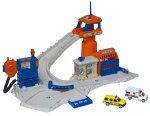
Make a clear call and answer it
Give the dispatcher a misplaced parcel or blocked entrance, then have a partner repeat the job and report back.
Matchbox Radio Rescue
Historical profile and play idea

Open a three-job workshop
Make work orders for a market, station and parade crew, giving each customer a reason to visit.
Tonka Power Grid: a truck that becomes a toy workshop
Give a small car a public story
Historical profile and play idea

Tell the race in three moments
Use Start, Pit and Finish cards to introduce a driver, interview the crew and write a headline about the run.
SpeedStars raceway: tell a race from start to pit stop
Historical profile and play idea

Make a tiny auto-show placard
Sketch the Escalade’s outline, label two eye-catching details and invite a visitor to leave a comment.
Hot Wheels Blings Escalade: give a tiny custom car a show card
Exhibition history and collection activity
Curate a three-car exhibition
Choose a shared detail, arrange three cars or drawings and give each one a label for a guided tour.
Hot Wheels Hall of Fame: Give a Small Collection a Big Story
Explore the collection
Find a closer look at each toy, activity or historical report, grouped by what you would like to explore. The original index remains below with its earlier titles and wording.
Town jobs, workshops and miniature settings
- Cars Mack Track Challenge
- Hess Toy Trucks: The Pictured 1990 Tanker
- Matchbox Emergency Car Wash
- Matchbox Haunted House
- Matchbox Hero City Ice Mountain
- Matchbox Mega Rig Dino Adventure
- Matchbox Radio Rescue
- Matchbox Super Blast Firetruck
- Micro Machines Super Stunt City
- Speedeez Hummer H2 Speed City: a vehicle opens into a miniature route
- Tonka Power Grid: a truck that becomes a toy workshop
- Trash Wheels Junk Yard Playset
Race routes, obstacles and launch sequences
- 2 Fast 2 Furious Power Raceway
- Hot Wheels Cyborg Assault
- Hot Wheels Electric Racing Battle Slam
- Hot Wheels Ferrari X-V Cyclone Chamber
- Hot Wheels Fireball Raceway
- Hot Wheels Gorilla Attack
- Hot Wheels Motorized Starter Set
- Hot Wheels Octoblast
- Hot Wheels Raptor Blast
- Hot Wheels Rev Ups Verti Canyon
- Hot Wheels Robo Wheels Crash Coaster
- Hot Wheels Serpent Cyclone
- Hot Wheels Shark Park
- Hot Wheels Super Jump Raceway
- Hot Wheels T-Wrecks
- Hot Wheels Tech Trax Airstunt Challenge
- Hot Wheels Tornado Twister
- Hot Wheels Trick Tracks Mega Chomp
- Hot Wheels Turbo Jet City
- Shake ’n Go Speedway
- SpeedStars raceway: tell a race from start to pit stop
Colors and imagined design labs
- Hot Wheels Color Shifters Color Blaster
- Hot Wheels Color Shifters Custom Color Shop
- Hot Wheels Dr. Bones Color Lab
- Hot Wheels Formula Fuelers Superfuel Lab
Character scenes and repair stories
- Battle Force 5 Saber: scout a route through an imagined world
- Disney Wild Racers: Black Heart GT and Rippin' Reptile
- Hot Wheels Lava Land Slimecano
- Incredible Crash Dummies: the Break-Apart Car
Collections and exhibition history
- Hot Wheels Blings Escalade: give a tiny custom car a show card
- Hot Wheels Hall of Fame: Give a Small Collection a Big Story Exhibition history and collection activity
Finger-bike routes
A miniature vehicle meant to cross the floor needs different qualities from a detailed model kept on a shelf. Decide how it will be handled and where it will go before comparing finishes, brands or collection size.
Start with the vehicle's job
Picture the activity: pushing a car, loading a truck, parking in a garage, using a track or arranging a display. Look at the parts that support it. Free-rolling wheels matter for one game; doors, trailers or working beds matter for another. Opening features can also add small or delicate pieces.
“Diecast” describes a manufacturing approach, not an age rating or a promise of durability. Miniature vehicles can combine metal bodies with plastic parts and other materials. Check the exact product's intended audience and use. A detailed collector model should not be assumed suitable for the same handling as a play vehicle.
Compare play and display
| Purpose | What matters | Check first |
|---|---|---|
| Rolling play | Grip, wheel movement and manageable weight | Intended age, condition and suitable surface. |
| Garages and scenes | Parking, doors, ramps and room for stories | Vehicle height, width, turning room and accessible moving parts. |
| Track systems | Fit through curves, guides and other features | The track maker's compatibility instructions for the actual vehicle. |
| Detailed display | A subject and finish the owner wants to keep looking at | Handling limits, stand, shelf space and protection from damage. |
| Powered or stunt sets | A specific mechanism or sequence | Required vehicles, batteries, clearance and complete instructions. |
Measure more than the scale label
Compare the actual length, width and height when combining vehicles and buildings. A protruding mirror, a tall load or a trailer can affect fit even when two models share a nominal scale. For a garage, include the entrance and ramp; for storage, include any stand or attached accessory.
Do not assume a vehicle will work on a track because it looks similar to one pictured on the box. Body width, wheel arrangement and underside clearance may matter. Use the track or playset's own instructions. A vehicle that does not fit can still have a place in a separate floor scene; forcing it through a mechanism is not a compatibility test.
Mattel's instruction finder is a useful starting point for its vehicle brands and sets. For other products, use the relevant manufacturer's support. Confirm the product number before requesting a replacement part, and do not assume an older set's special components remain available.
Build a small parking story
With vehicles appropriate for the player, draw a few parking spaces and a destination on a sheet of paper laid on a suitable surface. Let the player decide which vehicle goes where and what each one is carrying. A delivery can become a repair visit or a trip to meet another character.
Keep the route small enough to reset easily. Change a parking space or destination for the next trip. If one vehicle cannot turn or fit, redesign the scene or give it another job. This example is for ordinary rolling play, not powered launchers or elevated stunt tracks.
Store and inspect the collection
Choose storage that keeps vehicles from rolling into walking routes and protects delicate parts without bending them. Separate play vehicles from display models when they have different handling limits. Follow the maker's cleaning instructions, particularly for decorated surfaces, electronics or older models whose materials are uncertain.
Inspect used vehicles for loose wheels, broken attachments and sharp damage. The AAP's toy guidance explains age labels and small-part concerns; the CPSC recall database provides model-specific notices. Old age, a metal body or a collector label does not establish suitability for a child.
Explore Building Toys for constructing settings and RC Toys when remote control is the main interest. The historical collection below includes broader vehicle toys as well as diecast models. Its two older collector-book descriptions are retained as publishing history, not current valuations or a prediction that a collection will appreciate.
From the Toysit archive
Earlier coverage, with original titles and descriptions preserved as historical material. These descriptions include the promotional wording and claims of their time; they are not current operating instructions, safety assurances or product recommendations. Availability, pricing and app support have not been reverified. Identify the exact model and consult its current instructions and recall information.
- 2 Fast 2 Furious Power Raceway Racing Cars Game
- Blings Hotwheels
- Cyborg Assault Hot Wheels attack deluxe diecast track with swinging arm action that rips the highway in two.
- Disney Wild Racers - Disney Wild Racer 2-Pack: Lightyear Warpster/Galaxy Aggressor by Hasbro.
- Flick Trix - BMX finger bikes.
- Flywheels Rapid Fire Launcher launch five Road Champs Fly Wheels at once.
- Gadget Heads Car Factory Crayola crayon melt and form into toy race cars that can be broken apart, melted down, and molded again.
- GX Racers - Gyro technology vehicles are so balanced they can perform stunts on a string.
- GX Skate - Gyro balanced finger skateboard does amazing tricks and stunts.
- 2004 Hess Toy Trucks
- Hotwheels Car Factory - Make your own hotwheels out of clay and smash them up.
- Hotwheels Electric Racing Robot Battle Slam Bots - Hot Wheels - Battle Bot action.
- Hotwheels Fireball Raceway Hot Wheels Fire Ball Race Way
- Hotwheels Hot 100
- Hotwheels Motorized Starter Set - Hot Wheels Super Starter Set by Mattel.
- Hotwheels Museum - Hot Wheels Hall of Fame opens at Petersen Automotive Museum to mark 35th anniversary.
- Hotwheels Museum - Hot Wheels Hall of Fame
- Hotwheels Octoblast - Hot Wheels Octo Blast - Trackset comes with two cars.
- Hotwheels Raptor Blast
- Hotwheels Rev Ups
- Hotwheels Robo Crash Coaster - Hot Wheels Robo Wheels Crash Coaster Track Set.
- Hotwheels Serpent Cyclone
- Hotwheels T Wrecks
- Hotwheels Turbo Jet City - Hotwheels - Hot Wheels Turbo Jet City Playset by Mattel.
- Hot Wheels Battle Force 5 - Transforming vehicles from Hotwheels with sonic blasters, spinning attacks, and super speed.
- Hot Wheels Color Shifters Blaster - Change your Hotwheels cars with entirely new paint jobs.
- Hot Wheels Color Shifters Custom Color Shop - Change and detail your Hotwheels car into a different looking diecast vehicle.
- Dr. Bones Color Lab - Track and changer for color-shifting Hotwheels.
- Hotwheels Gorilla Attack Hot Wheels toy car motorized track set.
- Trick Tracks Mega Chomp Starter Set - Hot wheels track with shark attack.
- Hot Wheels Super Jump Raceway - Hotwheels track set includes a double booster so you can jump over the entire city.
- Ferrari XV Cyclone Chamber Hotwheels trackset with built-in motor.
- Incredible Crash Dummies play Hotwheels action figure model toy cycle, ATV, SUV, and cart make real crashing sounds.
- Hot Wheels Lava Land Slimecano playset involves launching diecast cars up a track that drives under lava and jumps over a slime pit.
- Mack Track Challenge - Lightning McQueen from Cars changes lanes and jumps up Mac's ramp.
- Matchbox Emergency Car Wash - Match Box - Matchbox car wash for emergency vehicles.
- Matchbox Hero City Ice Mountain Playset
- Matchbox Radio Rescue - Playset with real radio microphone.
- Matchbox Super Blast Firetruck - Releases real water balls and comes with a video of firetrucks in action.
- Matchbox Mega Rig Dino Adventure Vehicle megarig breaks into thirty vehicle combinations.
- Micro Machines Super Stunt City
- Moto Frenzy - Small stunt bike with Air Hogs stabilizing technology.
- Regenerator RCs
- Shake and Go Racers Speedway Raceway put rev power in your hands with toy cars that you shake to activate.
- Shark Park Hot Wheels Shark Playset Shark Bark
- Speed Stars
- Speedies Hummer H2 Speed City
- Super Fuel Lab Hot Wheels Formula Fuelers mixing kit laboratory for diecast racing vehicles includes Nitrox and Powermix.
- Tech Tracks Hot Wheels airstunt challenge set stunt system with flexible tracks and power booster section.
- Tonka Mighty Motorized Trucks - Tonka trucks keep on getting better.
- Tonka Power Grid - Workshop on Wheels.
- Tornado Twister Hot Wheels
Historical collector-book descriptions
Original descriptions from this page, first published November 24, 2010. References below to current values or up-to-date prices belong to that historical copy; they are not present appraisals, availability checks or investment advice.
Collectors Guide to Diecast Toys and Scale Models : Identification and Values - This is the second edition of this popular book. The first edition featured toy and model cars produced under 416 brand names. The second edition adds to that by offering insights into 580 brands of diecast and related automotive toys and models. The list is growing everyday. Since submitting the manuscript to the publisher last year, the number has grown to 638 and counting! Color photos enhance this 262-page encyclopedia of information that includes current values.
NASCAR Die-Cast Collector's Value Guide - The thrilling world of NASCAR racing is captured in the Collector's Value Guide! The guide includes an overview of NASCAR Winston Cup racing, die-cast collectibles for some of the top Winston Cup Series drivers, biographies for some of the biggest names in auto racing and up-to-date secondary market values! Be sure to check out our other fun titles such as: Hot Wheels, Dale Earnhardt, Jeff Gordon and more.
A guide to evaluating toys, not a hands-on product test. Read our editorial approach.
Created for Toysit by Tabbloza — the artwork in our header.